Throwback Thursday: Lynell Hamilton & Doug Deakin

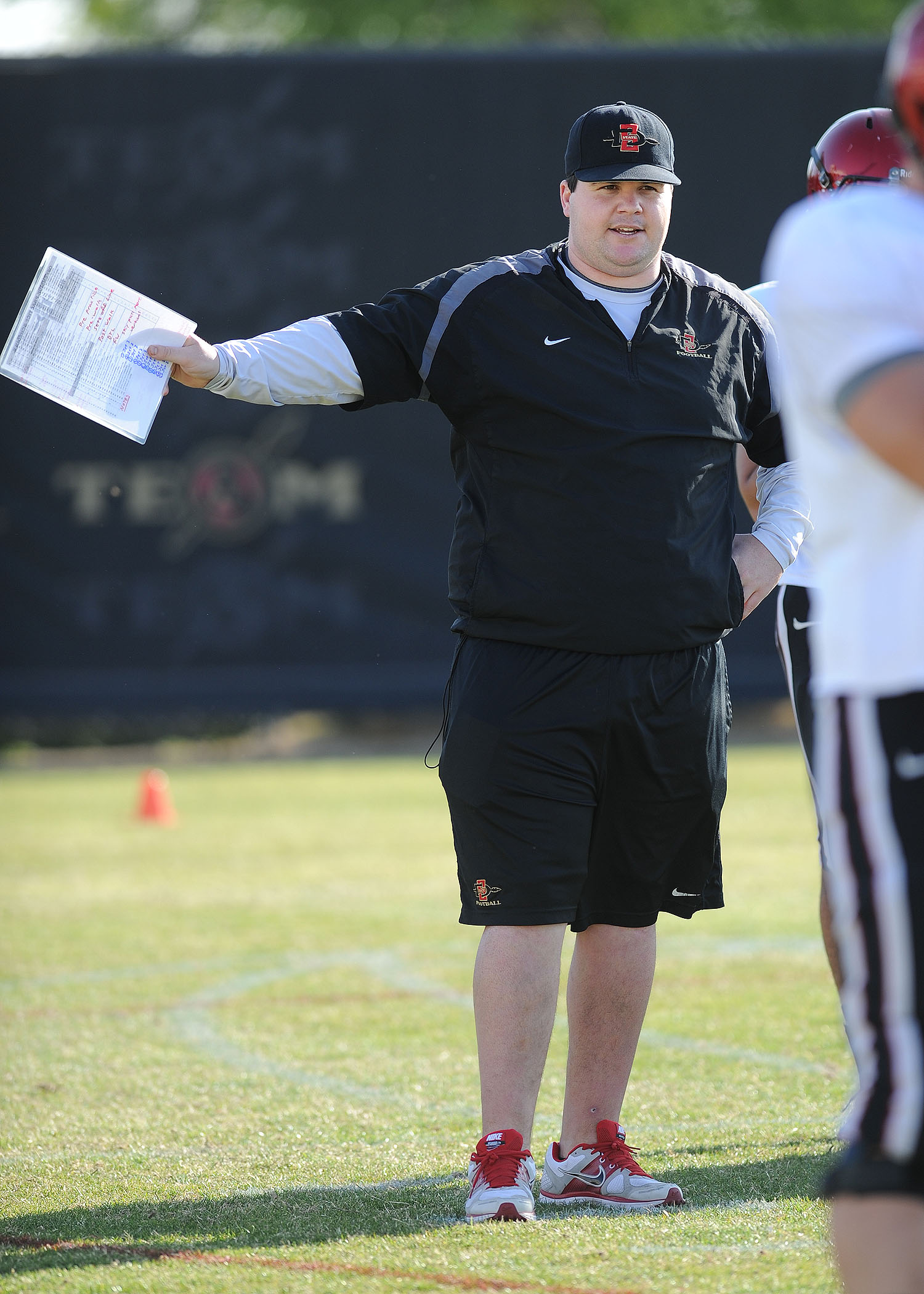
Lynell Hamilton and Doug Deakin are two past Aztec warriors who now serve as graduate assistants for the SDSU coaching staff.

Both are a big part of the history of SDSU football, and are continuing to contribute to the success of the program even after their playing days are complete.

Lynell Hamilton: The Player
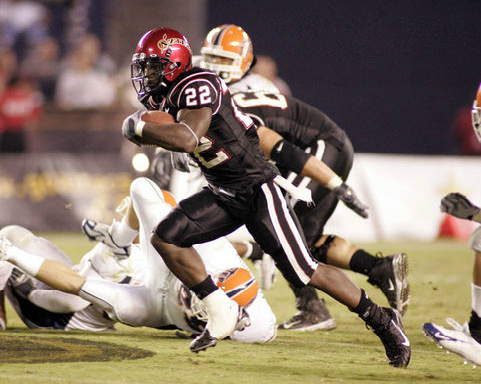
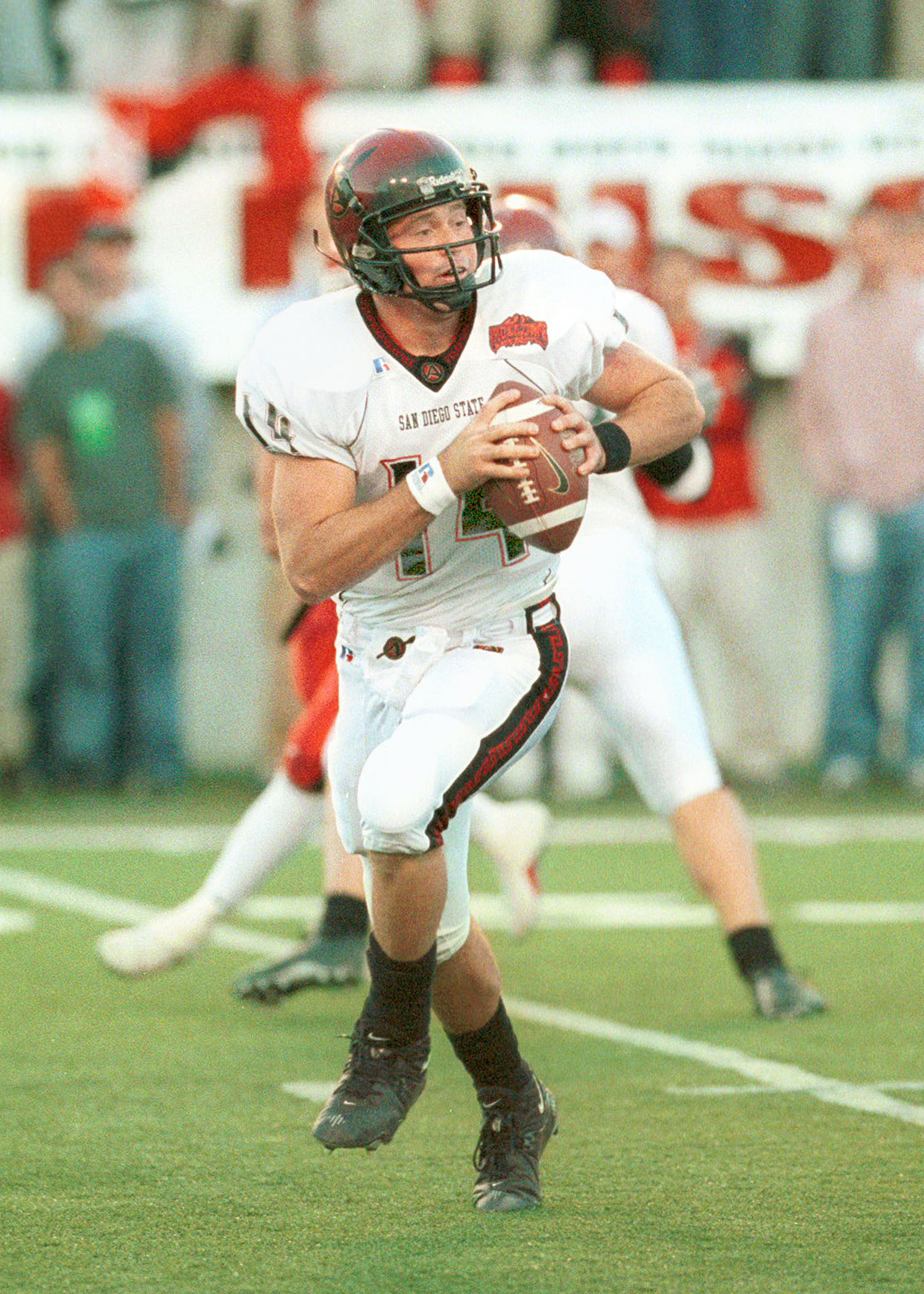
Lynell Hamilton carries the ball against UTEP in the 2003 season. Photo Credit: Ernie Anderon/SDSU Media Relations

Despite battling multiple injuries, Lynell Hamilton still solidified himself as one of the top running backs to ever play for San Diego State.

As a true freshman in 2003, Hamilton took the Mountain West Conference by storm, rushing for 1,087 yards and four touchdowns in just 10 games. Although he was sidelined for the final two games with an ankle injury, he still garnered multiple honors for his performance on the field.

Hamilton was named a first-team freshman All-American by Rivals.com and The Sporting News. He was also picked as the Mountain West Conference Freshman of the Year, and was named first-team all-conference.

Unfortunately, the ankle injury was the first of many for Hamilton during his time at SDSU, and he spent the rest of his career on and off the injury report.

Hamilton finished his career with 2,052 rushing yards and 14 touchdowns. His career rushing total currently ranks him at No. 11 on SDSU’s all-time rushing list.

Lynell Hamilton: The Coach
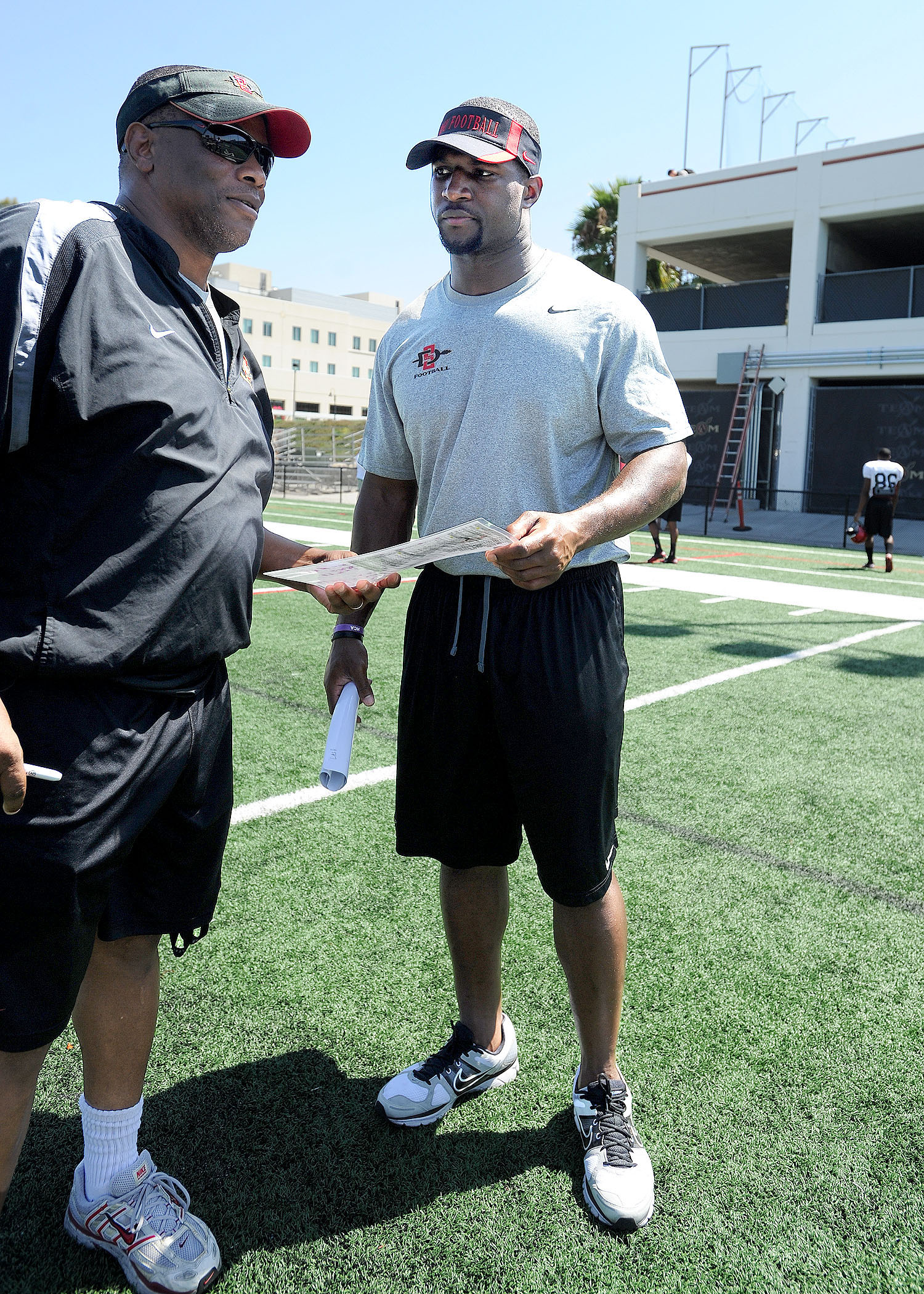
Lynell Hamilton helps coach LeCharls McDaniel (Ernie Anderson)

Following his collegiate career, Hamilton signed with the New Orleans Saints. His best season came in 2009, when he rushed for 135 yards and two touchdowns and became a Super Bowl Champion when the Saints defeated the Indianapolis Colts in Super Bowl XLIV.

After moving on from the NFL, Hamilton decided he wanted to stay involved with football.

He received an opportunity to work as a graduate assistant for his alma mater, and has been helping with the team since the summer of 2012.

After working in the weight room in the summer, Hamilton now helps primarily with special teams. He is also a mentor to the young running backs, giving them advice on what it takes to be a top-tier running back at the collegiate level.


Doug Deakin: The Player 

Doug Deakin during the 2009 season (Ernie Anderson)

When Doug Deakin came to San Diego State in 2006 as a student, he wanted nothing more than to be a part of the football team. Unfortunately, there were no open roster spots, and Deakin was unable to join the team as a walk-on.

But Deakin didn’t give up there.

After getting in touch with the football offices, he found a way to join the program as a volunteer member of the video staff and helped filmed practices.

In the spring of 2007, Deakin was given the chance to walk-on to the team, and took full advantage of the opportunity.

After a few seasons of playing on the scout team, Deakin worked his way onto the field in the 2009 and 2010 seasons on special teams.

His hard work and positive attitude inspired teammates, and he was voted as a team captain for the 2010 season. Following the season, he was also voted as the most inspirational player.

Deakin capped off his collegiate career playing in the Poinsettia Bowl, helping the Aztecs win their first bowl game since 1969.


Doug Deakin: The Coach

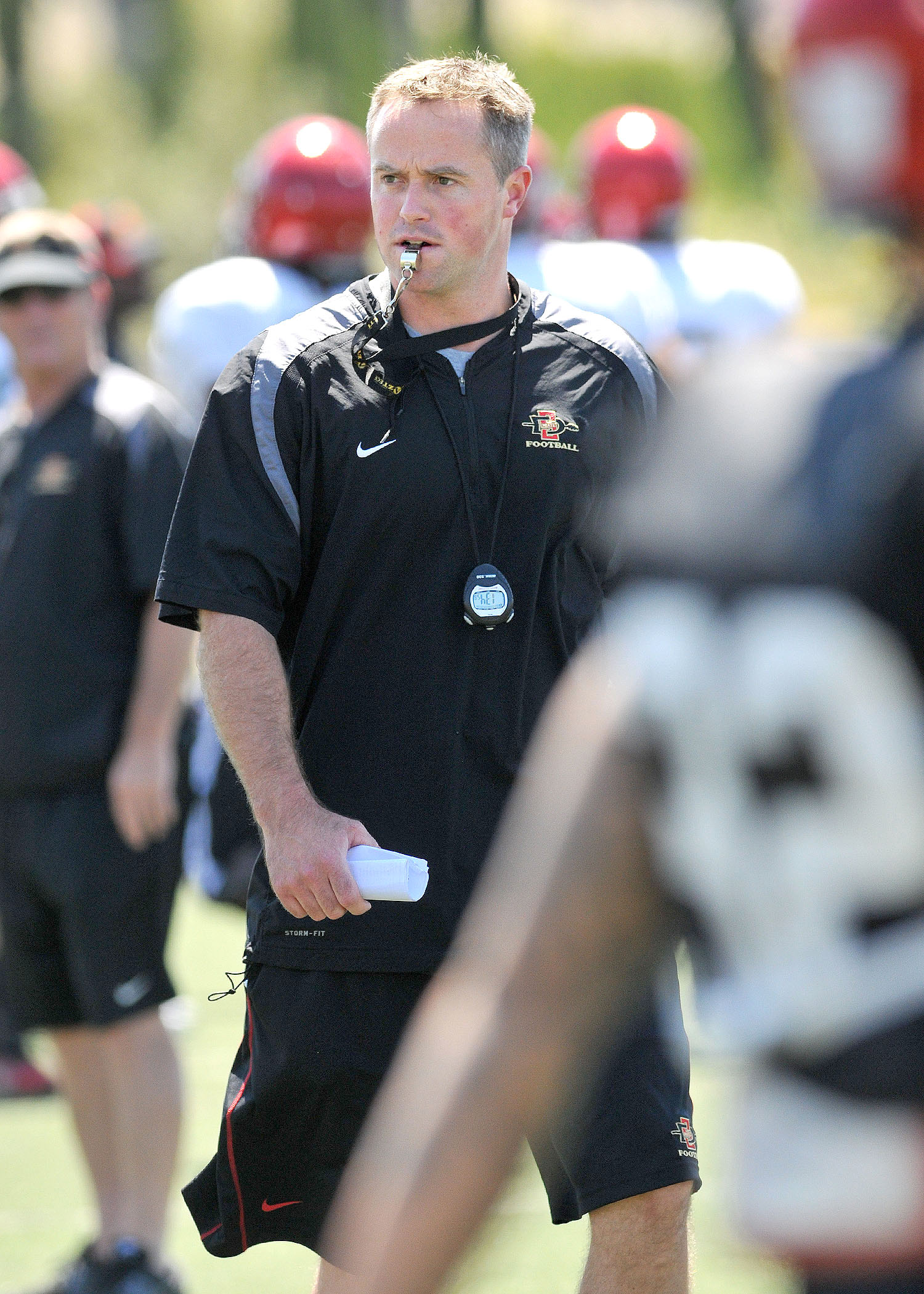
Doug Deakin helping freshman tight end Nick Rudolph in a special teams drill. (Ernie Anderson)

After volunteering during the 2011 season, Deakin was given the opportunity to become a graduate assistant in 2012.

He works primarily with special teams, and also helps out with everyday duties around the football offices.

As expected, Deakin has carried over his incredible work ethic from his playing days and been a huge asset to the coaching staff and the SDSU football program.


by Hunter Hewitt

GO AZTECS

Throwback Thursday: Brian Sipe

Former SDSU quarterback Brian Sipe (Ernie Anderson/SDSU Media Relations)

If ever a hall of fame was created for multi-talented, all-around sports figures, the candidate list would be quite impressive.

The shrine would not be for the typical superstar athletes, who enter their respective professional sports leagues, have record-breaking careers, and spend the rest of their lives living off of the large surplus of money made during their playing days.

This shrine would be for a select group of individuals; those who have left their footprints in the history of more than just one sport and continue to find ways to stay involved even when their playing days have ceased.

If ever such a thing were created, Brian Sipe would be a worthy candidate.

Growing up in California, Sipe was a sports fanatic from the very beginning. Although he was the only boy in a family with three sisters, he was able to dodge the dollhouses and dress-up parties and find his way onto the local little league baseball team in El Cajon.

In 1961, the small-town El Cajon Little League baseball team shocked the country with an undefeated season that ended with Sipe and his teammates winning the Little League World Series Championship.

The young boys turned into rock stars around the neighborhood, and this success prepared Sipe for the rest of sports career. He expected to succeed.

Although he began with baseball, Sipe experimented with many sports. He played baseball, basketball and football in high school.

“When I was young, baseball was the only option because there weren’t as many youth sports like there are today,” Sipe said. “But as soon as I got a taste of football, I fell in love with it.”

The competitive nature and team camaraderie turned Sipe into a football fiend, and he became obsessed with the sport.

He also became very good.

As a quarterback, Sipe was named the CIF Player of the Year in high school after a dominant senior year. He was fortunate enough to receive a football scholarship to nearby San Diego State University.

In college, Sipe excelled for three years under legendary coach Don Coryell, displaying his talent and athleticism every time he took the field. He finished his career with 5,707 total passing yards, and is currently ranked seventh on SDSU’s all-time list.

After flourishing at the collegiate level, it was time for Sipe to take his game to the next level, and he was selected in the 13th round by the Cleveland Browns in the 1972 NFL Draft.

After a few seasons of injuries and role changes, Sipe began to establish himself as a prominent quarterback in the NFL. His most successful season was in 1980, when he led his team to the playoffs with an 11-5 record. He threw for 4,132 yards and 30 touchdowns, and was named the 1980 NFL MVP.

Sipe is known throughout the sports world for being a member of the “Kardiac Kids”, his team’s nickname during the 1979 and 1980 seasons. Those two seasons consisted of several nail-biting victories that brought an incredible amount of excitement to the city of Cleveland and a much-needed boost for the economically burdened town.

Once his playing career was over, Sipe found himself back in San Diego with his wife and their three children. Although he was never a religious man, he and his wife began attending a local Christian church; an idea that they agreed would be beneficial for their family.

He was intrigued at the idea of joining a Bible study group, and doing so helped him grow fond of the religion and its teachings.

“The scripture described everything I believe about mankind,” Sipe said. “After a year or so of attending the study, I was able to surrender my defenses to God.”

Unable to get away from the game he loves, Sipe has spent the last decade of his life in the coaching profession. Ironically, Sipe was invited by his daughter to a Sante Fe Christian High School football game to watch her boyfriend play.

After the game, Sipe decided to offer some help, and the coaches could not turn down the former NFL MVP. In 2000, the head coach retired, and Sipe was asked to take over.

He spent the next eight years as the head coach, making sure to teach his players about God and life first, and football second. A relatively small school, Sante Fe Christian earned respect in San Diego, capturing four CIF section titles during Sipe’s tenure.

In 2008, Sipe was hired as the quarterbacks coach at his alma mater SDSU, a dream job for the former gunslinger. He spent his first three seasons coaching Ryan Lindley, a record-breaking quarterback who is now in the NFL.

Lindley, now a member of the Arizona Cardinals, has nothing but praise for his former coach

“He is an amazing coach on the football field, and even better in life,” Lindley said. “He is a man I can come to about anything from football, to school, to the Bible.”

As for the future, Sipe says that he loves his current job, and hopes to continue coaching for years to come. He has been instrumental in helping to incorporate past traditions into the current football program, and has been a huge asset to the team.

From Little League World Series Champion, to NFL MVP, to Division 1 football coach, Sipe has accomplished a lot. When you look back at his life, it is clear to see that he has left his footprints all over the world of sports.

The best part of it all? He’s not done walking yet.

Brian Sipe coaching the quarterbacks at SDSU (Ernie Anderson/SDSU Media Relations)

Throwback Thursday: Adam Hall & Mike Schmidt

When looking for an assistant coach, several factors come into play. Experience is often the most important.

However, every coach has to start somewhere, and this requires someone to overlook their lack of experience and focus on what else they can bring to a program.

Such is the case for Adam Hall and Mike Schmidt, two former players who have recently become coaches at San Diego State.

Neither of the two had been a coach before in their respective field, but their willingness to do everything in their power to help their former school succeed is something that cannot be found in other candidates.

This week’s Throwback Thursday will showcase Hall and Schmidt, both as players and coaches.


Adam Hall: The Player

Adam Hall was a quarterback as SDSU from 2001-2003 (Ernie Anderson/SDSU Media Relations)

Although his career was hampered by injuries, Adam Hall still left his mark in the San Diego State record books.

Hall originally attended the University of Texas in 1999, but decided to transfer to SDSU the following year. After sitting out a year due to NCAA transfer rules, he split time with quarterback Lon Sheriff in 2001.

In 2002, Hall became the full-time starter. Despite missing the final two games due to injury, he had one of the most prolific passing seasons in SDSU history.

Hall threw for 3,253 yards and 17 touchdowns as a redshirt junior. He threw for over 500 yards twice in one season, an accomplishment that no other Aztec quarterback has ever achieved. He currently ranks eighth on the all-time list for passing yards in a season at SDSU.

In 2003, Hall was bit by the injury bug once again, as he tore the labrum in his throwing shoulder. Opting to wait for surgery, he did his best to play his final season, appearing in seven games.

Battling through pain all season, Hall was still able to throw for 1,320 yards and 5 touchdowns.

Although he never made it through a full season, and was only a consistent starter once, Hall still ranks ninth on the all-time list for career passing yards at SDSU. He finished his career with 5,173 yards and 24 touchdowns.


Adam Hall: The Coach

Adam Hall: Head Strength and Conditioning Coach (Ernie Anderson/SDSU Media Relations)

In January of 2012, head coach Rocky Long was faced with a tough task. The newly hired strength coach unexpectedly left, and Long needed to find someone quickly to take over the strength and conditioning duties.

Long hired Hall, who was an assistant with SDSU in the weight room in 2009 with former strength coach Aaron Wellman.

In the end, it all worked out for SDSU, as Hall has taken over and done an incredible job running the strength and conditioning program.

He has been able to bundle a unique blend of knowledge, using a combination of what he learned from his playing days, Wellman, and his time at Texas to formulate his own philosophy.

Thanks to Hall, the Aztecs look stronger than ever, and will continue to gain strength as a team and pride themselves on their demanding offseason workout program.

Mike Schmidt: The Player

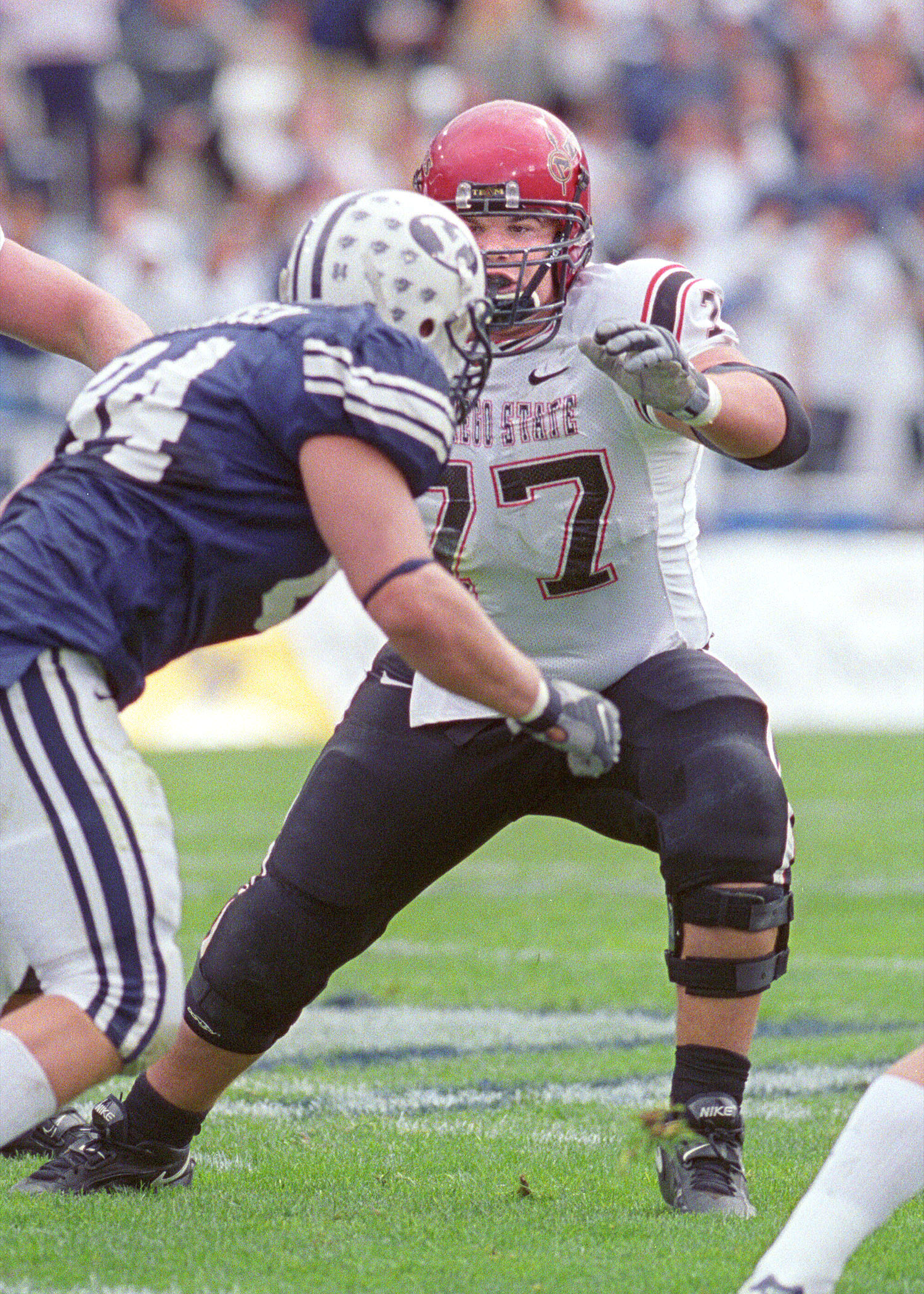
Mike Schmidt during the 2007 season (Ernie Anderson/SDSU Media Relations)

Mike Schmidt began his career as walk-on defensive lineman, and finished his career an offensive lineman on scholarship and a team captain.

He played in three games in 2005 as a defensive lineman, recording three tackles in the season. Following the season, he moved to offensive line for the 2006 spring practices.

The bulk of his playing time came in 2007 and 2008, where he played both left and right guard for the Aztecs. An aggressive player, Schmidt was known for his toughness in the trenches.

After a knee injury caused him to miss two games in 2008, he battled back and played through the pain in the final game of the season, a 42-21 victory over UNLV.

Mike Schmidt: The Coach

Mike Schmidt: Offensive Line Coach (Ernie Anderson/SDSU Media Relations)

In 2009, Schmidt joined the Aztecs as a volunteer assistant, trying to help his former team any way that he could. Former head coach Brady Hoke saw his dedication to the program, and Schmidt was given the opportunity to become a graduate assistant.

Schmidt was a huge part of SDSU’s success in 2010 and 2011, doing everything asked of him and more. Putting together game week preparation plans, organizing the defensive scout team, and working with the offensive lineman and tight ends were just some of the several duties that he had.

As a graduate assistant, Schmidt worked tirelessly and never complained, and his hard work did not go unnoticed by the coaching staff.

After offensive line coach Dan Finn left for a different job in the spring of 2011, head coach Rocky Long had to find a replacement. Similar to what happened with the hiring of Adam Hall, Long was faced with another tough decision.

Long eventually decided on hiring Schmidt, deciding that his work over the previous two seasons and passion for the football program made him worthy of the position.

Although outsiders appeared skeptical because of his young age and lack of experience, Schmidt has shown his worth and has handled his new job extremely well.


by Hunter Hewitt

GO AZTECS